.png)


Meet Our Newest Team Members: Why Miniature Donkeys Are Joining the Planet Ability Family
- Jul 21
- 4 min read
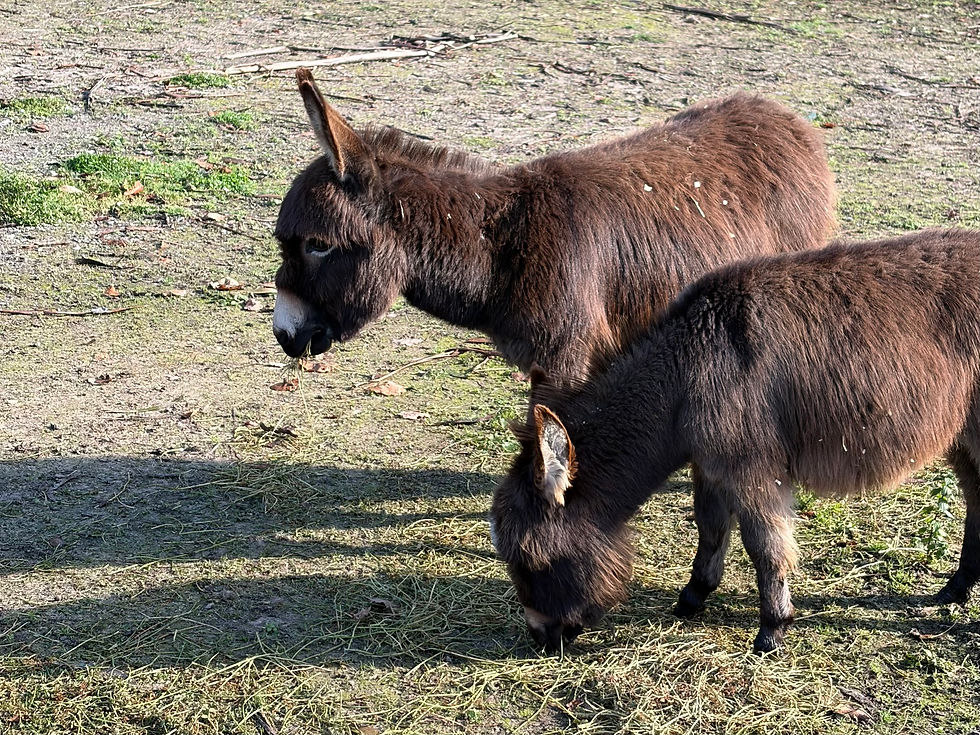
At Planet Ability, we are constantly looking for ways to deepen the sense of safety, connection, and regulation for our participants. We believe that therapy shouldn't just happen within four walls; it should happen everywhere (nearly).
That’s why we are absolutely thrilled to announce the newest expansion of our team. While you may already know our professional therapy dogs, Gucci, Gigi and Na-Na, we are now introducing a different kind of support: Miniature Donkeys.
These gentle friends aren't just here to look cute (though they certainly do!). They represent a strategic expansion of our approach to Occupational Therapy. However, it’s important to understand that they play a very specific role that differs from our canine colleagues.
Why Miniature Donkeys?

If you’ve ever stood near a donkey, you might have noticed the world seems to slow down. Donkeys are known for their incredibly steady temperaments. They process the world with a calm, deliberate pace that is incredibly soothing to a nervous system that is often stuck in "high alert."
For our neurodivergent community- many of whom navigate a world that is too loud, too fast, and too demanding- the donkey offers a sensory sanctuary. Their slow movements and predictable nature provide a low-demand environment where a person can be.
🚀 Key Sensory Benefits:
Tactile Regulation: Their soft fur provides a proprioceptive input during grooming or petting.
Auditory Support: Donkeys are generally quiet, offering a low-arousal interaction.
Co-regulation: Their heart rate is lower than a human’s, and when we stand near them, our own heart rate often begins to mirror that calm, lowering our cortisol levels.

The Difference: Engagement Animals vs. Therapy Dogs

At Planet Ability, we are all about clinical integrity and transparency, ensuring families know exactly what type of support they are receiving.
1. Animal-Assisted Therapy (AAT) – The Professionals
Our therapy dog, Zeena, is trained in Animal-Assisted Therapy. They are integral parts of specific clinical goals. In an AAT session, the dog is a "co-therapist." They might help a client practice fine motor skills by putting on a harness, or assist with executive functioning by following a multi-step sequence of commands. Zeena has specific "jobs" during a session designed to help meet NDIS goals.
2. Emotional Support and Engagement Animals
Our miniature donkeys fall into the category of Emotional Support Animals. Their role is less about "doing tasks" and more about "building bridges."
They are here to facilitate emotional safety and motivation. For a child who might feel anxious about coming to therapy, the prospect of visiting the donkeys can be the "bridge" that gets them through the gate. Once there, the interaction is about relationship-building, comfort, and engagement. There are no clinical demands placed on the donkey, and in turn, there are no "performance" demands placed on the client.
The "Why, Who, and When Not" Framework

To help you decide if donkey engagement is a fit for your family's journey, we use our signature framework:
🚀 Why?
We introduce miniature donkeys to foster intrinsic motivation and regulation. For many neurodivergent young people, traditional therapy can feel like a series of "tasks" to be completed. Meeting a donkey isn't a task; it’s an experience. This connection can reduce the "fight or flight" response, making the brain more receptive to the work we do later.
🚀 Who?
This is perfect for clients aged 2 to 35 who:
* Experience high levels of anxiety or school can't.
* Need support with emotional regulation and "slowing down."
* Are seeking a non-judgmental social connection.
* Have sensory-seeking needs
🚀 When Not?
Engagement with the donkeys might not be the right fit if:
* A client has a significant fear of animals.
* There are severe allergies.
A Neurodiversity-Affirming Connection
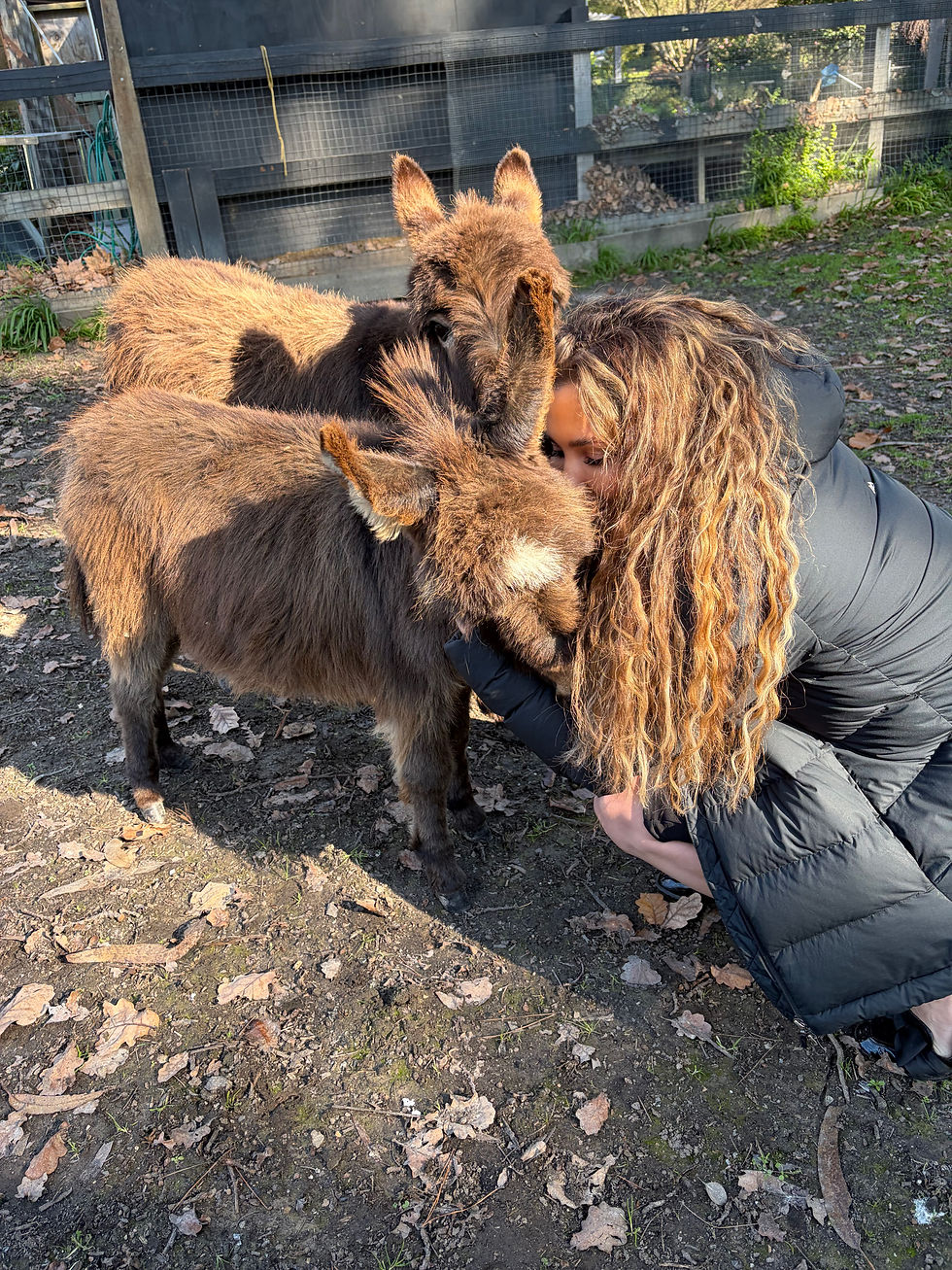
The most beautiful thing about a donkey is that they don't care about eye contact. They don't care if you're sitting still or if you're using your inside voice. They accept you exactly as you are in that moment.
In a world that often asks neurodivergent individuals to mask their true selves to fit in, our donkeys offer a space of acceptance. When a client feels accepted by an animal, it builds the self-confidence necessary to tackle challenging tasks: whether that's learning to cook a meal in our clinic kitchen or navigating the social complexities of the community.
By integrating animals into our environment, we aren't just "doing therapy"; we are creating an environment where growth feels natural and safe.
How to Meet the New Team
If you feel that emotional engagement with our animals could be a helpful part of your or your child's therapeutic journey, we’d love to chat. Whether you're looking for a detailed Functional Capacity Assessment or ongoing Individualised Therapy, we are here to support you with a team that truly understands the neurodivergent experience.


Comments