


Beyond the ABCs: The Occupational Therapy Guide to School Readiness


Preparing a child for primary school (Prep/Kindergarten) is rarely about abc's or counting to 10. From an Occupational Therapy (OT) perspective, true readiness is about functional capacity, how a child navigates physical environments, manages daily routines, regulates their emotions, connects with peers, and communicates their needs.
These skills are not mandatory prerequisites or tests a child must "pass" to start school. Rather, screening these areas helps parents and therapists identify a child's unique strengths, pinpoint where they need skill-building, and determine what reasonable adjustments or accommodations the school should provide to create an inclusive environment.
Below is an in-depth breakdown of the six core developmental pillars of school readiness, including specific functional skills and screening activities.

1. Emotional Regulation & Self-Advocacy
OT Focus: Interoception, Body Clues, Co-Regulation, and Seeking Support
A classroom is a intense sensory and emotional environment. Children need tools to recognise their emotions before they can self-regulate or ask for assistance.
Communicating Emotions: Communicating emotions (verbally, gesturally, or via AAC) when distressed or excited.
Identifying Body Clues: Connecting emotions to bodily sensations (e.g., "my belly feels fluttery," "my chest feels tight").
Asking an Adult for Help: Recognising when a task is too difficult or when a basic need isn't being met, and actively seeking support from an educator.
Identifying Regulation Strategies: Exploring and utilising sensory tools (e.g., deep pressure, breathing, movement) with guidance.
Separation & New Environments: Managing the transition of separating from primary caregivers and adapting to unfamiliar classroom setups.
💡 Screening & Home Strategy Prompts:
Body Clues Activity: Trace your child's outline on a large roll of butcher paper. Have them draw or label where different feelings live in their body (e.g., butteries in the stomach for nervousness).
Screening Coping Strategies: Give your child a challenging puzzle with a missing piece. Observe whether they become overwhelmed or if they advocate for themselves by asking for help.
Energy Explorers Station: Set up stations at home featuring movement (animal walks), tactile fidgets/putty, breathing tools (blowing cotton balls/pinwheels), heavy work (proprioception), and noise-reducing headphones to discover what calms or alerts their nervous system.

2. Social Interaction, Peer Connection & Play
OT Focus: Joint Attention, Conflict Resolution, Personal Space, and Play Preferences
Social readiness isn't about forced compliance or social rules; it's about meaningful engagement, boundary safety, and mutual respect.
Noticing & Following the Group Plan: Recognising what the collective group is doing and aligning with the flow when it fits their capacity (e.g., walking together to the playground).
Joining Play & Sharing Space: Approaching peers when motivated, sharing physical space or play items, taking turns, and waiting when it feels manageable.
Managing Conflict: Beginning to explore ways to resolve minor disagreements (e.g., sharing, letting someone else go first, or negotiating play roles).
Body Orientation & Personal Space: Maintaining physical positioning that keeps themselves and peers safe and comfortable.
Solo Play Preference: Accessing and enjoying solitary play activities when they need downtime or prefer independent recreation.
💡 Screening & Home Strategy Prompts:
Roleplay Conflict Games: Use toy trains or action figures to act out imaginary play scenarios where two items conflict (e.g., two trains wanting the same track) and practice negotiating solutions together.
Media Screener (e.g., Bluey): Watch a favourite show, pause during social moments, and ask questions about what the characters are thinking, feeling, or needing.
Observe Solo Play Skills: Provide opportunities for small-world play, Lego, or sensory play (playdough, swinging) to see how your child recharges independently.

3. Self-Care, Dressing & Daily Routines
OT Focus: Independence in Toileting, Clothing Fastenings, and Belongings
Self-care autonomy directly impacts a child's confidence and energy levels throughout a long school day.
Toileting Autonomy: Navigating the complete bathroom routine independently, knowing where the toilets are, managing clothing, wiping properly, flushing, and washing hands.
"Lunchbox Literacy": Unlatching lunch boxes, twisting water bottle caps, opening zip-lock bags, and unwrapping snacks.
Dressing & Fastenings: Putting on/taking off jumpers, pulling up pants/tights, and operating Velcro, zippers, and large buttons.
Responsibility for Belongings: Keeping track of hats, jackets, drink bottles, and backpacks across transition points in the day.
💡 Screening & Home Strategy Prompts:
Toileting Sequence Puppet Roleplay: Use visual routine cards or puppets to act out the sequence of going to the toilet to verify your child understands every step.
Lunchbox Picnic Rehearsal: Pack a complete school lunch and have your child practice opening every container and backpack zip during a weekend park trip.
Outside Play Challenge: Rehearse putting on hats, jumpers, and shoes before stepping outside, tailoring choices to hot or wet weather.

4. Gross Motor & Postural Stamina
OT Focus: Postural Control, Bilateral Coordination, and Spatial Navigation
Physical stamina ensures children can navigate large school grounds and sit comfortably without physical exhaustion.
Postural Core Sitting: Maintaining an upright posture at a table desk or sitting on the floor mat during instruction.
Navigating Transitions & Waiting: Standing in a line during transitions and walking across school grounds to the playground.
Locomotion & Playground Play: Jumping, hopping, climbing ladders/stairs, navigating monkey bars, and balancing.
Ball Skills & Chair Management: Throwing, catching, and kicking small to medium balls, as well as pushing/pulling chairs in and out.
💡 Screening & Home Strategy Prompts:
Seated Table Board Games: Play games like Snakes & Ladders at a properly sized table requiring your child to reach across their body (crossing midline) while maintaining core balance.
Multi-Skill Obstacle Courses: Create home courses involving hopscotch, stepping stones, climbing frames, and balance beams.
Musical Seating Exploration: Try various seating options (chairs, floor cushions, wobble stools) to discover which seating style best supports your child's posture.

5. Fine Motor, Bilateral Coordination & Tool Use
OT Focus: In-Hand Manipulation, Pencil Grasp, Scissors, and Pre-Writing
Fine motor precision and hand strength form the foundation for academic tool usage like pencils, scissors, and craft supplies.
Hand Dominance & Pencil Grasp: Establishing a consistent dominant hand (2–4 years) and utilizing an efficient three-finger pencil grasp.
Pre-Writing Shapes & Letters: Drawing basic lines, copying circles, squares, and triangles, and attempting letters/numbers.
Scissor & Craft Skills: Cutting simple shapes along lines, applying glue appropriately, and coloring within designated borders.
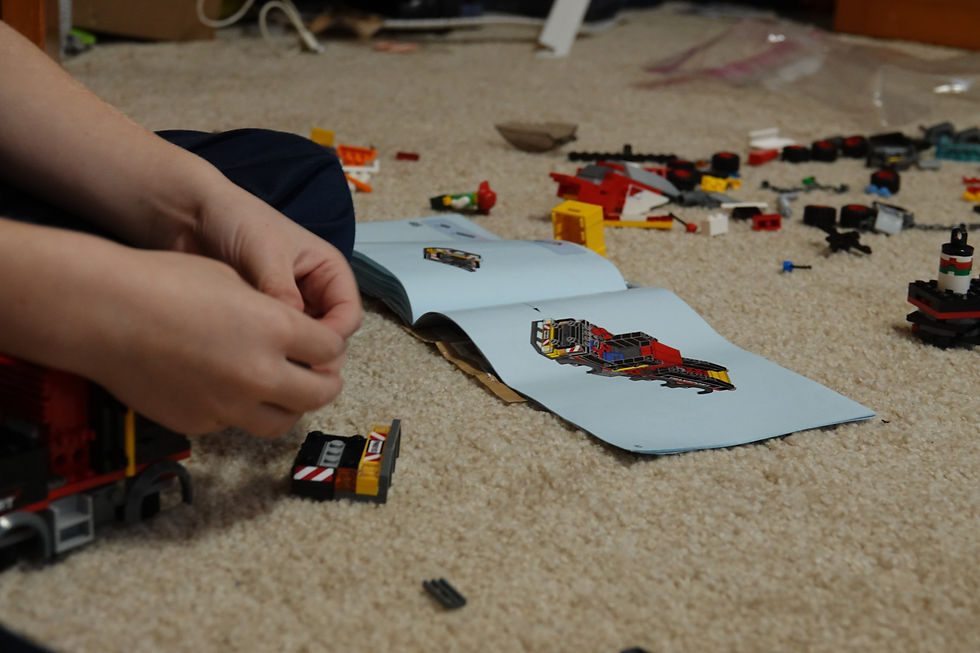
Object Manipulation & Construction: Manipulating small items, building Lego models, and completing 20+ piece puzzles.
💡 Screening & Home Strategy Prompts:
"Spider in a Web" Name Game: Have your child guess and write out the letters of their name on paper to observe automatic grasp patterns.
Holiday Crafting: Color, cut out, and paste age-appropriate shapes onto poster paper to screen scissor control and glue usage.
Morning Routine Trial Run: Practice packing a backpack with real school items to evaluate finger strength when operating zippers and snaps.
6. Executive Functioning & Classroom Routines
OT Focus: Working Memory, Impulse Inhibition, Organisation, and Cognitive Flexibility
Executive function acts as the brain's management system, helping children plan, focus, remember instructions, and juggle multiple tasks.
Multi-Step Auditory Processing: Listening to and executing 2- to 3-step sequential commands (e.g., "Hang up your bag, grab your hat, and meet me at the mat").
Impulse Control & Rule Inhibition: Waiting turns, raising hands before speaking, respecting boundaries, and keeping hands to oneself.
Managing Belongings Over Time: Remembering non-daily items (e.g., library bags on Tuesdays) and retrieving jumpers at recess.
Tolerating Schedule Changes: Navigating routine changes flexible (e.g., substitute teachers, wet-day timetables) without severe distress.
💡 Screening & Home Strategy Prompts:
Multi-Step Obstacle Course: Issue combined physical and mental instructions (e.g., "Hop 5 times, crawl under the table, then draw a triangle on the whiteboard").
Daily Routine Sorting with "Surprise Cards": Have your child arrange daily routine cards in order, then insert a "Surprise Wet Day Timetable" card to practice flexibility and discuss adaptations.
Visual Checklists: Create visual picture checklists for daily bag-packing to support working memory.
Not sure what to do next?
We’ve created an OT School Readiness Screening Checklist to help you look beyond the ABCs and explore the real-life building blocks of a successful transition, from handling lunchboxes and navigating bathroom routines to managing big emotions and building peer connections. Designed through a neurodivergent-affirming lens, this tool isn't a test for your child to "pass"; it’s a friendly guide to highlight their unique strengths, pinpoint everyday skills you can practice at home, and identify any extra support or classroom adjustments that will help them shine on Day 1.
Grab a copy through the link below!

How can we support you
Comprehensive Readiness Assessments: We evaluate your child’s self-care, motor skills, sensory needs, and emotional regulation to map out their unique strengths and support profile.
Empowering Home Strategies: Get clear, actionable tools from lunchbox hacks to sensory reset games, you can easily practice at home to build everyday independence.
Targeted OT Support & Goals: If extra practice is needed, we create tailored, play-based therapy goals to boost hand strength, core stability, and self-advocacy before the first school bell rings.
School Accommodation Plans: We collaborate directly with teachers to recommend simple adjustments (visual schedules, sensory breaks, custom seating) so the classroom fits your child.
Ready to set your little one up for a confident transition?
📞 Book a School Readiness Assessment today or download our Free OT School Readiness Checklist to start exploring at home!

Comments